Event Day(s):
Saturday 25 July, 10:00-11:00. The King's Arms Loki Centre, Kirkby Stephen
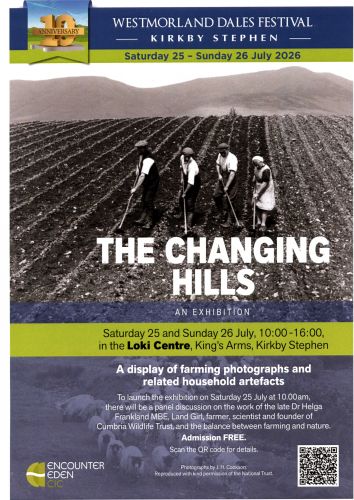
The Changing Hills: launching the display of hill farm photographs & household artefacts from the collection of Hilary Wilson, a panel discussion covering the work of the late Dr Helga Frankland MBE, wartime and post-war farming history and how the balance between food production and nature has developed and continues to develop. An Encounter Eden event.
Panellists
Helga Frankland
Helga Frankland, of Needle House, Fell End, Ravenstonedale, died in 2015 at the age of 94. She was a Land Girl, farmer, scientist and founder of what is now the Cumbria Wildlife Trust. Her life exemplifies the running of the balance between food production and nature conservation in our local fell country ... a story which continues today with the modern adoption by some locally of sustainable and regenerative farming methods.
She was the great grand-daughter of the eminent early C19th chemist, Sir Edward Frankland KCB, FRS, FRSE. Sir Edward discovered valency - the principle ruling the combining powers of chemical elements. He and Sir Michael Faraday, whose parents co-incidentally were from Outhgill in Mallerstang, were friends and hence Michael Faraday became the godfather of Helga Frankland's grandfather, Percy Faraday Frankland CBE FRS - also a noted chemist. The Frankland family have long associations with Ravenstonedale and Dentdale.
Images
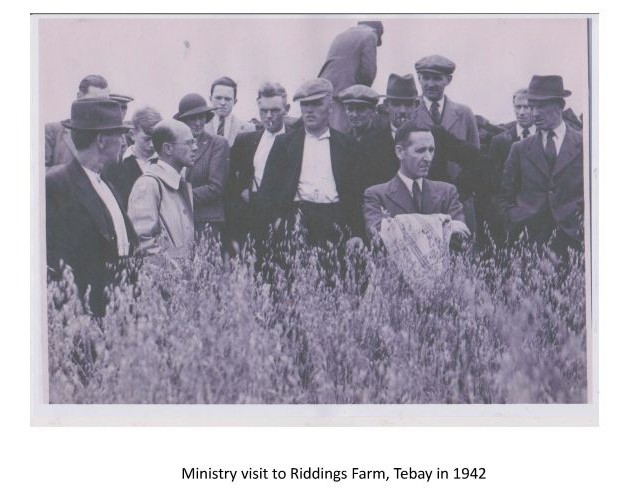
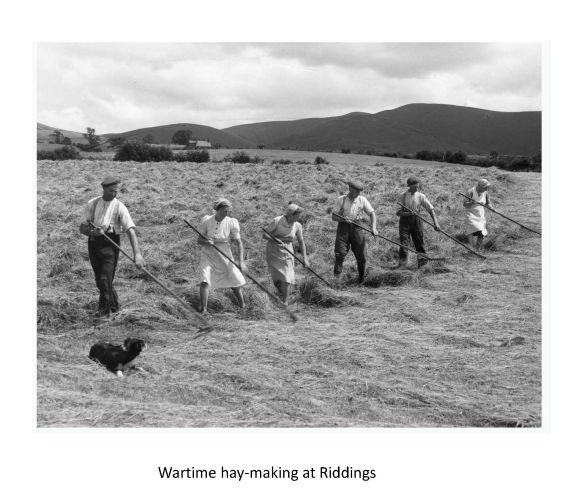
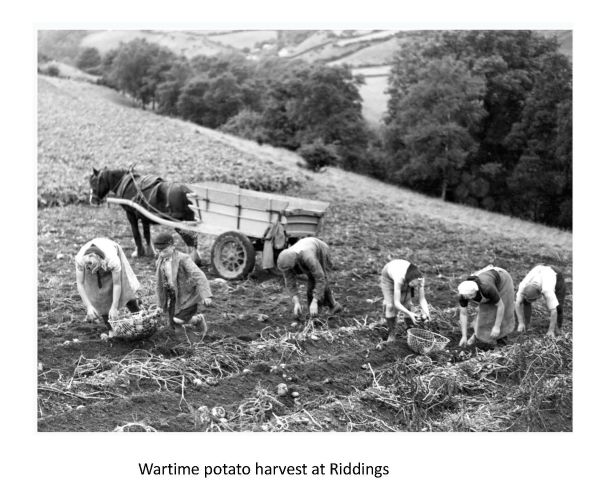
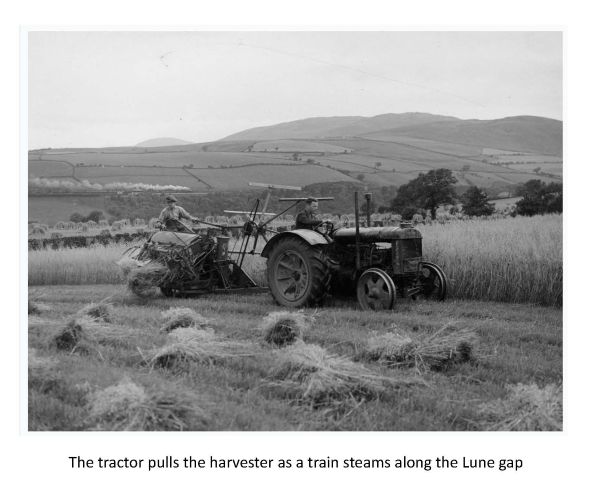
We will be using (by kind permission of the National Trust) the late JH Cookson photographic archive of the Postlethwaite farm at Riddings to chart huge change. We look back briefly at pre-war farming traditions and the horse-drawn era, and forward to the enforced changes to local sheep farming practice during WW2 owing to Ministry of Food policy - essentially 'Digging for Britain' - which meant the ploughing up hay meadows, and the coming of the tractor